Author: Helena Darragh
Helena Darragh, Head of Conservation at the Countryside Regeneration Trust, volunteered at ORFC 2026. She shares her takeaways of the experience, and how volunteering enabled her to access the heart of the conference, and the agroecological community.
The Oxford Real Farming Conference (ORFC) is increasingly becoming a popular January fixture in the farming calendar for anyone interested in the future of our food and farming systems. Offering an alternative to the Oxford Farming Conference, taking place at the same time in the same city, ORFC gives an opportunity for a huge range of topics to be discussed from science and policy to cultural change, performances and storytelling.
Having attended in previous years as a punter, I decided this year to experience the conference from a different perspective by volunteering as part of the team that helps make the event happen.
There were several reasons for signing up. First and foremost, it felt like an opportunity to give something back to a conference that provides so much value to the farming community. ORFC brings together a remarkable mix of farmers, researchers, conservationists, food producers and campaigners, creating a space for honest and transparent discussion and shared learning. Volunteering also came with the practical benefit of a free conference ticket, making it an accessible way to take part while supporting the delivery of the event.
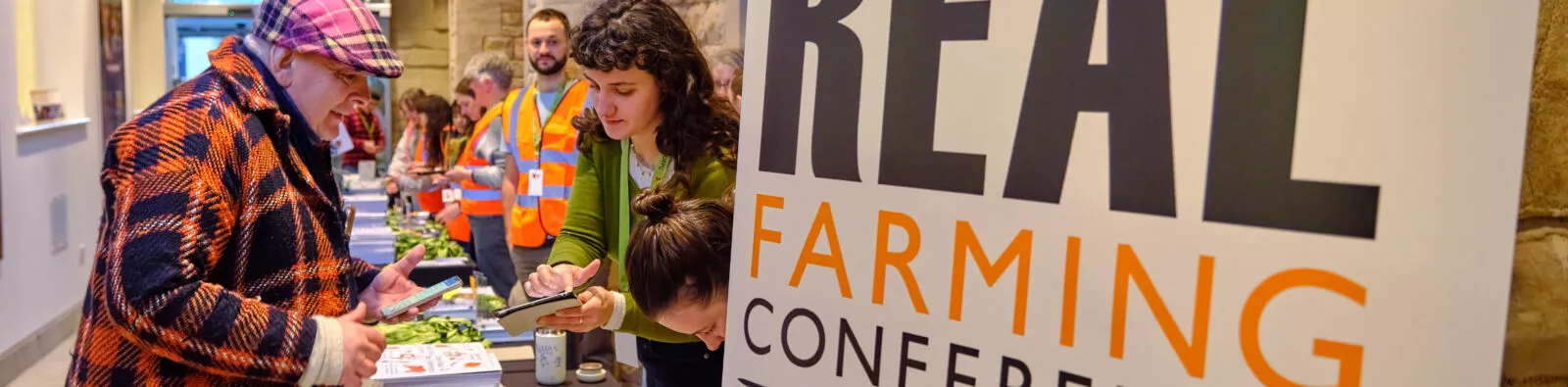
Perhaps one of the greatest aspects about attending as a volunteer was the fact that I was able to meet far more people than had I gone as an attendee. Working alongside fellow volunteers and conference organisers meant I was constantly meeting new people and making connections that may never have happened if I had been sitting in sessions for the majority of the day. I also had the opportunity to meet and escort speakers to their talks.
One of the most rewarding aspects was the chance to meet like-minded people who care deeply about farming and the environment. Conversations often moved beyond introductions to sharing experiences, discussing challenges and exchanging ideas. Whether talking about sustainable farming practices and conservation, to behavioural change in the food sector, there was a real sense of learning from one another.
Volunteering also gave me a new appreciation for what happens behind the scenes. Events of this scale do not happen by accident, and it was helpful to see the amount of coordination, teamwork and effort required to bring hundreds of people together. Being part of that process made me feel more connected to the conference and to the wider movement that it supports.
Importantly, volunteering did not mean missing out on the conference itself. I was still able to attend several inspiring and thought-provoking sessions. One standout talk explored efforts to improve water quality in Lough Neagh in Northern Ireland. The discussion highlighted the challenges posed by nutrient pollution, including the role of private sewerage treatment systems alongside wider land management practices, while also showcasing practical solutions being employed by farmers and landowners to filter water in the catchment.
Another fascinating session focused on creating direct routes to market for farm produce. A deep dive into on-farm vending machines covered everything from investment costs and logistics to butchering, packaging and marketing meat directly to consumers. It offered an useful perspective on how farmers can add value and build closer relationships with customers.
I also enjoyed sessions exploring access to land and comparing land ownership and policy across Europe and the UK. These discussions raised important questions about who owns land, who can access it and how future policies might support new entrants into farming. Equally memorable was hearing about community-owned cattle herds grazing heathland, demonstrating how local people can become actively involved in managing landscapes and supporting nature recovery.
Volunteering at ORFC 2026 was a really great way to attend the conference, providing me with an opportunity to contribute, build new connections and gain a deeper understanding of the issues shaping modern farming. I felt like was not only able to help make a fantastic event possible, but also came away feeling genuinely part of something bigger.
Interested to volunteer at ORFC 2027? We’d love you to join us in January! Applications to volunteer with us are open until the end of October – apply on our volunteering page.